Who Was Ahmed Al-Badawi? His Life, Spiritual Journey and the Bedeviyye Order

Ahmed Al-Badawi is one of the prominent Sufi figures of the 13th century and the founder of the Bedeviyye Order in Egypt. Known for his ascetic lifestyle, prolonged silence, and spiritual training through gaze and attention, he became a central figure in Islamic mysticism.In the history of Sufism, the concept of asceticism encompasses not only individual purification but also maintaining distance from political authority. This issue is discussed in greater detail in our article titled "Are Public Sector Salaries Halal? An Islamic Perspective on State Income and Lawful Earnings" within the context of the relationship between public authority and religion.
Born in Fez and later settled in Tanta, Egypt, his life combines scholarship, spiritual discipline, miracle narratives, and the institutional formation of a Sufi order. This article presents a comprehensive overview of his life, teachings, disciples, and historical influence.
Life
Ahmed el-Bedevî was born in the city of Fez, Morocco, in 596 AH / 1200 AD. His full name is Abu’l-Fityan Ahmed bin Ahmed bin Ibrahim al-Fasi al-Tantawi al-Bedevi. His nicknames include Abu’l-Fityan, Abu’l-Abbas, Shihabuddin, and al-Attab.
His family
Father: Ali (also referred to as Ibrahim in some sources)
Mother: Fatima
Grandfather: Ibrahim al-Fasi
Brother: Hasan (traveled to Iraq with Ahmed al-Bedevi)
His family migrated to Morocco in 73 AH / 692 AD due to political turmoil in Arabia. Ahmed el-Bedevi went on the pilgrimage with his family at a young age and lost his father while in Mecca.
Education
He memorized the Qur’an, then studied the seven recitations (qiraat). He became deeply knowledgeable in Shafi’i jurisprudence and participated in scholarly gatherings with scholars in various cities.
His travels
In his youth, he traveled to Iraq, where he visited the graves of great Sufis such as Abdulqadir al-Gilani, Ahmed al-Rifa’i, Hallaj al-Mansur, Sirri al-Sekati, Ma’ruf al-Karkhi, and Junayd al-Baghdadi. These visits played an important role in his spiritual development.
Settlement
In 1236, he settled in the city of Tanta in Egypt, where he met his successor, Abdulal b. Fakih, who would serve for forty years. He spent the rest of his life in Tanta.
Family Tree
Ahmed
→ Ali
→ Ibrahim
→ Muhammad
→ Abu Bakr
→ Ismail
→ Omar
→ Ali
→ Osman
→ Hussein
→ Muhammad
→ Musa
→ Yahya
→ Isa
→ Ali
→ Muhammad Javad
→ Hasan
→ Ali
→ Muhammad
→ Ali Rida
→ Musa Kazim
→ Ja’far al-Sadiq
→ Muhammad Baqir
→ Ali Zayn al-Abidin
→ Imam Husayn
→ Imam Ali (may Allah be pleased with them all)
Ahmed el-Bedevî is considered both a seyyid and a sharif. That is, he is said to be descended from both Hasan and Hussein. For this reason, he is counted among the descendants of the Prophet (s.a.v.).
Marriage and Children
Sources do not provide definitive information about Ahmed el-Bedevî’s marriage and children. Sufi sources generally focus on his life of asceticism and piety, so his family life is not described in detail. However, some biographies mention that he did not marry and devoted his life entirely to worship and service.
Spiritual Life and Sufi Journey
Ahmed el-Bedevi’s spiritual life was based on an understanding of Sufism founded on asceticism, silence, and devotion. After engaging in outward sciences in his youth, he underwent an inner transformation; he abandoned worldly speech and began to live in silence. During this period, he stopped talking to people and communicated only through gestures. According to Sufi sources, he traveled to Iraq after seeing three consecutive dreams; there he visited the graves of great Sufis such as Abdulqadir al-Gilani, Ahmed al-Rifai, Hallaj al-Mansur, Sirri al-Sekati, Maruf al-Karkhi, and Junayd al-Baghdadi. These visits were a turning point in his spiritual development. After settling in the city of Tanta in Egypt, Ahmed el-Bedevi withdrew into seclusion and practiced asceticism for many years by sitting on the roof and gazing at the sun. This practice, known as “sütûh,” has become one of the distinctive features of the Bedeviyye Order. For this reason, the order has sometimes been referred to as “Sütûhiyye.” According to legend, Hazrat Ahmed al-Bedevi practiced asceticism for forty days and nights by staring at the sun, during which time his face and eyes became severely reddened. At the end of this asceticism, he made the following supplication:
> “O sun! If my light does not surpass your light, I cannot be a servant of Allah.”
These words were met with great pleasure by Allah; such a light was given to Hazrat that it was impossible for a normal eye to look at its brightness. For this reason, Ahmed al-Bedevi Hazrat began to cover his face with a double veil. This veil was considered both a spiritual secret and a protective curtain. It is reported that those who sought to see this light directly met with death. Ahmed el-Bedevi trained his disciples not with words, but only with his gaze and attention. He provided spiritual education using this method for twelve years. Abstinence and silence became his fundamental principles of life; he lived a life distant from the people and close to Allah. This way of life was not only an individual asceticism but also the foundation of building a Sufi order. His method formed the spirit of the Bedeviyye Order and spread in many regions, especially Egypt, in the following centuries.
The Words and Teachings of Ahmed el-Bedevî
The words of Ahmed el-Bedevi have reached us today not in the form of written works, but rather through the advice he gave to his disciples, the inspiration he received in his dreams, and the wise sayings recorded in his biography. His words are based on asceticism, trust in God, silence, patience, and complete submission to God.
Compilation of His Wise Sayings
“Keep your secret hidden! Live according to what is said! Endings are built upon the things at the beginning.”
→ Inspired by a dream, he advised his disciples to keep secrets and live with integrity.
“Remember that Allah is One! Do not sleep! He who desires high ranks cannot sleep!”
→ He emphasizes the importance of night prayer; wakefulness is a condition for spiritual ascent.
“I turned my gaze toward him, and Allah delivered him to me.”
→ He expresses that he used the method of gaze and attention, not words, in training his disciples.
“Silence is the remembrance of the heart. When the tongue is silent, the heart speaks.”
→ Sees silence as a form of remembrance; encourages introspection.
“Whoever turns to Allah, Allah turns to him. Whoever turns to the people, the people tire him.”
→ This saying, which determines the direction of attention, summarizes the essence of Sufism.
“The person upon whom my gaze falls either finds guidance or perishes.”
→ It describes the effect of the spiritual gaze; this saying points to the power of attention.
“If my light does not surpass the light of the sun, I cannot be a servant of Allah.”
→ This supplication, made at the end of his asceticism, carries the secret of the light Allah gave him.
“My veil is to protect the people from the intensity of my light.”
→ This statement, explaining the reason for covering her face, is a reflection of her spiritual state.
“Knowledge is of no benefit unless the heart is purified.”
→ It emphasizes that outward knowledge must be combined with training of the heart.
“Whoever spends the night with Allah can spend the day with the people.”
→ It describes the reflection of night worship in daily life.
Fundamental Principles of His Teachings
Silence: He abandoned worldly speech and communicated through gestures for long periods. This is a method based on controlling the tongue in training the self.
Attention and Gaze: He trained his disciples not with words, but only with his gaze and attention. This method is accepted in Sufism as the transmission of spiritual energy from heart to heart.
Abstinence and Asceticism: His asceticism, which involved staring at the sun for forty days, is an example of patience and submission that pushes the limits of the self.
Keeping Secrets: He advised keeping one’s spiritual states hidden and living a life free from ostentation.
Night Worship and Fasting: Following the inspiration he received in his dreams, he made night worship and daytime fasting a constant practice.
The words of Ahmed el-Bedevi were shaped more by his spiritual state and behavior than by written texts. His teachings formed the basis of the Bedeviyye Order and were passed on orally by his disciples.
The Bedeviyye Order, Its Disciples, and Its Works
The Founding of the Order
The Bedeviyye Order was founded by Ahmed el-Bedevî in the 13th century in the city of Tanta, Egypt. The order is based on the principles of asceticism, silence, devotion, and contemplation. Over time, the order also became known as “Sutuhiyya” because Ahmed al-Bedawi spent long periods fasting while gazing at the sun on the roof. The order’s etiquette and rituals were systematized by his successors after Ahmed al-Bedawi’s death. The essence of zikr is heartfelt remembrance. However, throughout history, forms of zikr such as cehrî and kıyâmî-kuûdî have also been adopted.
Notable Students and Successors
The following are important figures who were directly trained by Ahmed el-Bedevî or who held positions of authority at the center of the order:
| Student / Caliph Name | Role / Feature |
| — — — — — — — — — — — — — — — — — | — — — — — — — — — — — — — — — — — — — — — — — — — — — — -|
| Abdülâl b. Fakīh | First caliph; served for 40 years, succeeded him. |
| Abdurrahman Ali Nûreddin | Served as postnişin at the Tanta dergah. |
| Şemseddin Muhammed | Played an influential role in spreading the order. |
| Şehâbeddin Ahmed | One of those who systematized the Bedouin principles. |
| Muhammed Abdurrahman | Played a role in organizing zikr ceremonies. |
| Abdülkerîm b. Ali | Spread the order’s cehrî zikir practices. |
| Sâlim and İbrâhim el-Esmer | Served as postnişin; was dismissed due to some controversies. |
| Muhammed el-Ebyaz | Played an effective role in spreading the order to North Africa. |
Works Written by Students
There are very few works written directly by Ahmed el-Bedevi; however, the following works were written in his name or based on his teachings:
Evrâd and Salavât
→ Texts of remembrance and prayer attributed to Ahmed el-Bedevî. They are still recited by members of the order.
Vesâyâ (Testaments)
→ Registered in the Süleymaniye Library under Şehid Ali Paşa no. 1397. Contains the fundamental principles of the order:
- Adherence to the Qur’an and Sunnah
- Continuation of heartfelt remembrance
- Tahajjud prayer
- Patience and endurance
- Hospitality to guests, respect for sheikhs
Itḥāfu’l-aṣfiyāʾ and ʿIḳdu’l-cevher
→ These works describe the chain of transmission and the pillars of the order. They were transmitted by scholars such as Zebîdî and Harîrîzâde.
Refʿu’n-niḳāb
→ A treatise dealing with the Bedouin-Shazeli relationship. It examines the order’s connection with other branches.
The Spread and Influence of the Order
The Bedouin Order received great support, especially in Egypt during the Mamluk and Ottoman periods. Statesmen such as Melik Baybars and Sultan Kayıtbay showed great respect to Ahmed el-Bedevî and had his tomb repaired. Over time, the order spread to North Africa, Sudan, and the Levant region, where it was regarded as a “savior” and “hero” among the people. The historical impact of Sufi movements has also played an important role in shaping the perception of religion today. You can also take a look at our article titled Religious Understanding Today: Formalism, Modernization and the Crisis of Meaning, which addresses this topic from a more contemporary perspective.
The Miracles of Ahmed el-Bedevî
Ahmed el-Bedevî is one of the great saints counted among the Four Great Masters in the history of Sufism. His miracles are accepted as signs of his closeness to Allah and his spiritual influence. These events have been recounted by both his disciples and the public as extraordinary occurrences that took place with Allah’s permission.
The Ascetic Practice of Gazing at the Sun and the Miracle of Light
According to the TDV Islamic Encyclopedia, Ahmed el-Bedevî practiced asceticism by sitting on the roof for long periods of time and gazing at the sun. This practice was called “sütûh” and became one of the unique aspects of the order. For this reason, the order was sometimes also referred to as “Sütûhiyye.” According to reports, during this ascetic practice, his face and eyes became very red; finally, he made the following supplication:
> “If my light does not surpass the light of the sun, I cannot be a servant of Allah.”
Upon these words, Allah Almighty granted him such a light that it was impossible for a normal eye to look at its brightness. For this reason, Hazrat began to cover his face with a double veil. This veil was regarded both as a spiritual secret and as a protective curtain for the people.
Spiritual Assistance to Sultan Baybars
Ahmed al-Bedevi was greatly respected by Sultan Baybars of Egypt. According to Wikipedia, when Baybars found himself in a difficult situation during battle, he turned to the Saint; the Saint provided spiritual assistance, and victory was granted.
Heart Training and Attention
According to TDV, Ahmed el-Bedevî trained his disciples not with words, but only with his gaze and attention. He provided spiritual education using this method for twelve years. This state is accepted in Sufism as “the transfer of spiritual energy from heart to heart.”
Women Covering Their Faces
The intensity of the light on Hazret’s face has been associated with the tradition of women covering their faces among the people. As stated on Wikipedia, his veil was seen as a symbol of modesty and decency; this state also had an impact on social life.
The Narrative of Saving Muslims from Christians
Ahmed el-Bedevi was seen as a “savior” and “hero” by the Egyptian people. According to Wikipedia, he was believed to have saved Muslims from the hands of Christians. Such narratives are related to his high reputation among the people.
His Death and Tomb
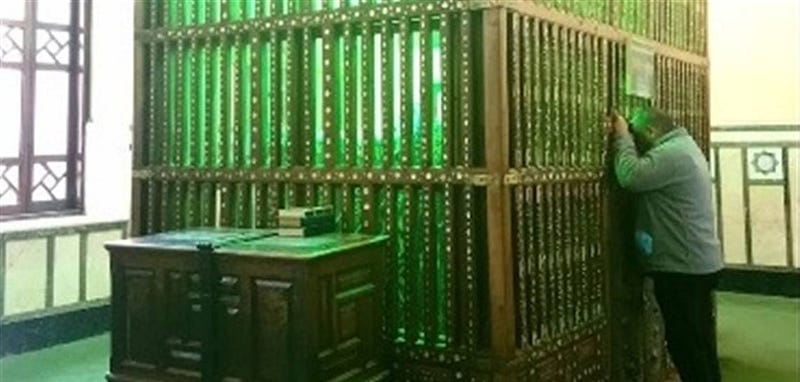
Ahmed el-Bedevî lived in seclusion in the city of Tanta, Egypt, for many years; he disciplined his disciples not with words, but with his gaze and attention. Until the end of his life, he was occupied with asceticism, silence, and worship; he lived a life distant from the people, close to Allah.
Date of Death
According to the TDV Islamic Encyclopedia, Ahmed el-Bedevi passed away in Tanta in 675/1276. After his death, his successor, Abdülâl b. Fakīh, took his place.
His Tomb
His tomb is located inside the Ahmed el-Bedevi Mosque in the city of Tanta. The tomb is visited with great reverence by the Egyptian people. In particular, the annual Mawlid celebrations are attended by hundreds of thousands of people. These celebrations have become both a spiritual gathering and a cultural tradition.
Historical Development of the Tomb
The tomb was first restored by the Mamluk Sultan Malik Baybars. It was later expanded during the Ottoman period and turned into a complex together with the mosque. Today, it is considered one of the largest pilgrimage sites in Egypt. The tomb of Ahmed el-Bedevi is not just a grave; it is also the center of the Bedeviyye Order, a spiritual stop, and a place that keeps the people’s emotional bond alive.
References
TDV Islamic Encyclopedia — Ahmed el-Bedevi Entry
Author: Mustafa Kara
[Click to access the entry](https://islamansiklopedisi.org.tr/ahmed-el-bedevi)
Prof. Dr. Ahmet Şimşirgil — Ahmed-i Bedevî Article
[Article link](https://www.ahmetsimsirgil.com/ahmed-i-bedevi/)
Wikipedia — Ahmed el-Bedevi Page
[Wikipedia page](https://tr.wikipedia.org/wiki/Ahmed_el-Bedev%C3%AE)
Turbeler.org-Seyyid Ahmed el-Bedevi Hz. (https://turbeler.org/detay/1268-seyyid-ahmet-el-bedevi-hz)
Sufi and Historical Works
Harîrîzâde — Târîhü’t-Tarîkāt
Information about the lineage and principles of the Bedeviyye Order.
Zebîdî — İtḥâfü’l-aṣfiyâʾ fî ṭabaḳāti’l-evliyâʾ
The biography and Sufi rank of Ahmed el-Bedevî.
Manuscripts of Şehid Ali Pasha — Vesâyâ (Wills)
Süleymaniye Library, no. 1397. Texts of advice and devotional prayers attributed to Ahmed el-Bedevî.
Iqd al-Jawhar
The fundamental principles of the order and the teachings of Ahmed al-Bedevi.
Rif’u’n-Niqab
A treatise dealing with the Bedevi-Shazeli relationship.
Glossary of Terms
| Term | Description |
| — — — -| — — — — — |
| Sütûh | Ascetic practice performed while sitting on the roof; the Bedouin’s original method of asceticism.
| Teveccüh | Turning from heart to heart; a method of spiritual training by gazing at the disciple.
| Nazar | Spiritual gaze; a Sufi orientation that affects the disciple’s heart.
| Asceticism | Abstaining from worldly pleasures; a simple and pious lifestyle.
| Silence | Refraining from speech; a state of silence for the discipline of the self.
| Evrâd | Daily recited prayers and zikr texts; regularly practiced in Sufi orders.
| Vird | A specific number of repeated zikrs; a form of zikr given specifically to the disciple.
| Erkân | The rules of practice of the order; includes elements such as zikr, conversation, and etiquette.
| Aktâb-ı Erbaa | The four great poles; those who hold the highest spiritual positions in the Sufi tradition.
| Postnişin | The person occupying the position of sheikh at the center of the order; the caliph or leader.
| Menâkıbnâme | A type of work describing the lives, miracles, and teachings of the saints.
| Tarikat | The path of Sufi education; a system of spiritual training based on the relationship between the guide and the disciple.
FREQUENTLY ASKED QUESTIONS
In which century did Ahmed Al-Badawi live?
He lived in the 13th century (7th century AH) and passed away in 675/1276 in Tanta, Egypt.
What is the Bedeviyye Order?
It is a Sufi order founded by Ahmed Al-Badawi in Egypt, based on asceticism, silence, spiritual attention, and devotion.
Did Ahmed Al-Badawi really practice asceticism by gazing at the sun?
According to Sufi sources, he practiced a form of ascetic discipline known as “sutuh,” which involved prolonged sun-gazing.
Where is his tomb located?
His tomb is located inside the Ahmed Al-Badawi Mosque in Tanta, Egypt, and remains an important pilgrimage site.
If you liked this article, you might also like my other work:
Comments
Post a Comment