What Is Hidanah? Who Gets Child Custody After Divorce in Islam?
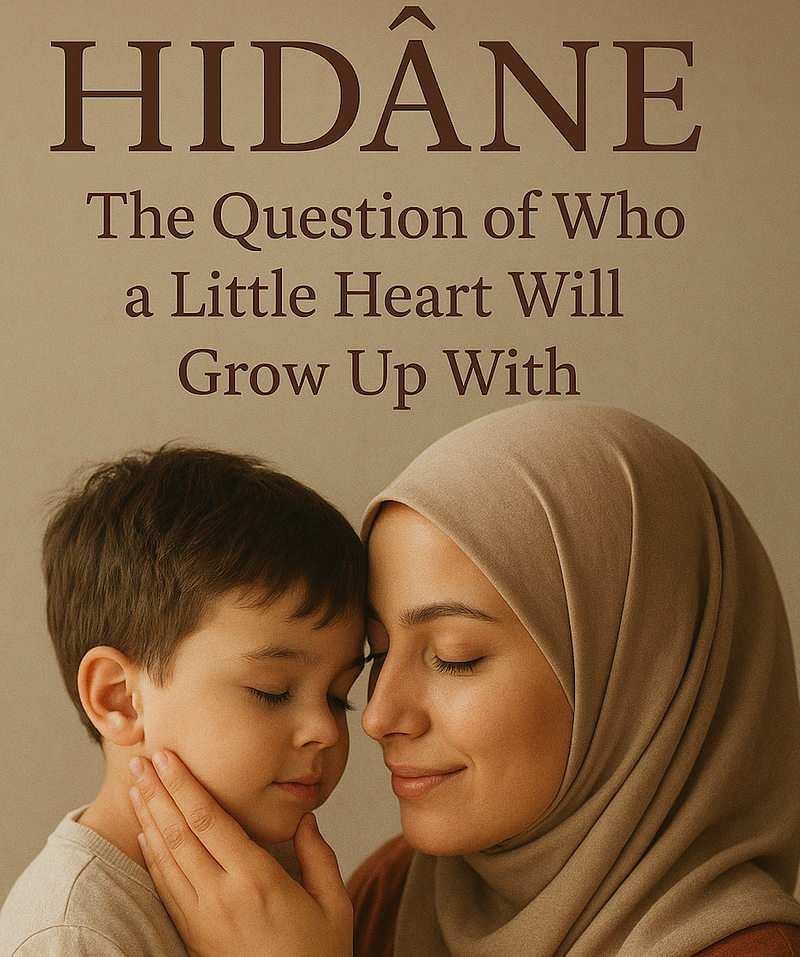
Divorce in Islam is not merely the separation of two adults; it directly affects the future of a child. One of the most discussed issues in Islamic jurisprudence is hidanah — the right of child custody and care after separation. Many people ask: Who receives custody after divorce in Islam? Does the mother automatically have priority? Can the child choose?
This article examines the concept of hidanah within classical Islamic law, compares scholarly opinions across schools of thought, and evaluates the issue from the perspective of the child’s best interest.
“Divorce is a separation; but for the child, it is the beginning of a new life. So, with whom will this life be shaped?”
When a marriage ends, the most precious thing left behind is the child. The Islamic rules that determine the child’s care, upbringing, and who they will live with are called ‘hidanah rights’; this right is a responsibility shaped by conscience regarding who the child will live with after the separation.
A woman came to the Messenger of Allah (pbuh) and said:
“This is my child. My womb was his vessel, my lap his shelter and refuge, my breast his fountain. Now this man wants to take him from me.” The Messenger of Allah (pbuh) said to her:
“As long as you do not marry another husband, your right to the child takes precedence.” (Abdurrezzak, Musannaf, VII/153; Ahmed b. Hanbal, Musnad, II/182; Abu Dawud, Talak 34; Hakim, Mustadrak, II/225; Darqutni, Sunan, III/304; Zayla’i, Nasbu’r-Raya, III/267.)
Having learned this, we say: If a person who has separated from his wife has a child, the mother has more rights to take the child. The child stays with her until he no longer needs her. If the child is a boy, this period continues until he can eat and drink on his own and dress himself. In Dâvûd b. Reşid’s “Nevâdir,” it is stated, “until he can perform his ablutions (istinca) himself.”
If the child is a girl, the mother has more rights regarding custody until she reaches puberty. After the children have passed the age of custody, the father has more rights over both types of children. This is because the mother only has the right of custody. This right ends when they no longer need it. From then on, the main need is the protection of the child. The father is stronger when it comes to protection. Because a woman is inadequate in protecting herself, she needs another person to protect her.
Even if a girl no longer needs discipline, she still needs to learn household chores such as knitting, cooking, and washing clothes. The mother is more authoritative in this area. If this responsibility is given to the father, she will start going in and out among men. This diminishes her sense of modesty. However, the sense of shame is innate in women. This feeling develops if she stays with her mother. Therefore, it is more appropriate for a girl to stay with her mother until she reaches adulthood.
When a girl reaches puberty, she feels the need to marry. The father has guardianship in marriage. She is now vulnerable to temptation and will be the target of men’s sexual gaze. Men have feelings of jealousy and restraint that women do not have. The father has opportunities that the mother does not have to protect his daughter.
Muhammad (pbuh): When a girl reaches puberty, the father is more entitled to take her under his wing. This is because he is stronger in protecting and caring for a girl of this age.
As for the son, once he no longer needs his mother, he needs to learn the tasks that men engage in. The father is stronger in this regard. He now needs someone to educate and discipline him. Furthermore, being with women corrupts men’s morals. If a boy is left with women, his speech softens and becomes broken. His behavior begins to resemble that of women. Ultimately, this results in a feminized (effeminate) male type. For this reason, once the male child no longer needs his mother, he is given to his father. This is the view of the Hanafi school of thought. According to Imam Shafi’i, the child is left to choose between his mother and father. Whichever parent he chooses to stay with, he is given to that parent. The evidence for this is the hadith that the Messenger of Allah (peace be upon him) left a male child to choose between his father and mother. (Tirmidhi, Ahkam 21; Ibn Majah, Ahkam 22; Bayhaqi, es-Sunan al-Kubra, VIII/3; Zayla’i, Nasbu’r-Raya, III/269.)
After the mother and father separate, the father is responsible for the child’s breastfeeding and maintenance expenses. The verse states:
If they breastfeed your children, pay them their wages. (At-Talaq 65/6)
If the father finds another wet nurse for less than the fee requested by his wife to breastfeed the child, and his separated wife does not agree to this fee, a wet nurse may be hired for the child. In the verse:
If you cannot agree (with your separated wife regarding breastfeeding), another woman will breastfeed your child. (Et talak 65/6) because the child’s mother intended to harm him by pressuring her separated husband and demanding a high fee. However, the hired wet nurse comes and breastfeeds the child with the mother present. The father does not take the child from the mother. Because the right of care belongs to the mother. The father does not have the authority to take away this right.
If the mother agrees to breastfeed for the same fee, the right to breastfeed belongs to the mother. If the mother and father are not separated, the mother cannot charge a fee for breastfeeding. However, if the mother does not want to breastfeed her child, she cannot be forced to do so. The child has no father.
If the mother agrees to breastfeed for the same pay, the right to breastfeed belongs to the mother. If the mother and father are not separated, the mother cannot receive pay for breastfeeding. However, if the mother does not wish to breastfeed her child, she cannot be forced to do so. If the child has no father but has a mother and uncle, and their financial situation is good, the breastfeeding expenses shall be covered by these two in proportion to their inheritance shares, one-third and two-thirds respectively. The evidence for this is the following verse:
“The same (provision of maintenance) is incumbent upon the heir…” (Baqara 2/233)
If the uncle is poor and the mother is wealthy, the obligation of breastfeeding and maintenance rests solely with the mother. If the child has a mother, a paternal brother, and an uncle, and all of them are wealthy, the obligation of breastfeeding is divided between the mother and the brother in the same proportion as the inheritance, two-thirds and one-third. In this case, the uncle has no obligation.
If the mother of a child without a father is poor and has a wealthy aunt and uncle, the aunt assumes two-thirds of the child’s maintenance, and the uncle assumes one-third.
If divorced spouses have more than one child, the wealthy or middle-class spouse who is obligated to provide maintenance is ordered to hire a servant to care for these children. If one servant is not sufficient, two servants are hired to perform the services required for the child. If the mother remarries, the father has the right to take the child back from her. After the mother, the mother’s mother takes her place in caring for the child and is accepted in the mother’s stead. Whether the mother is Muslim, of the People of the Book, or a fire worshipper makes no difference for custody. So the mother’s right of custody is not lost. If the mother is not Muslim, once the child reaches the age of reason, whether girl or boy, they are taken from the mother. If the mother has a husband, he is considered. If this husband is the child’s grandfather, he is still entitled to take the child. If this husband is a stranger to the child, he is not granted the right of custody.
After the grandmother, the right of custody belongs to the paternal grandmother. If the paternal grandmother has a husband, he is considered; if this husband is the child’s grandfather, the ruling is the same. If he is a step-grandfather and the paternal grandmother is not alive, then the right of custody passes to the sisters. A sister from the same mother and father takes precedence over a sister from the same mother. In custody, a sister from the mother’s side takes precedence over a sister from the father’s side. After the sisters come their daughters. The daughters of the sisters take precedence over the daughters of the brothers. After the sisters, the right of custody belongs to the child’s aunt, and then to the aunt who is a sister from both parents. The evidence for this is the following hadith. Hz. Ali, Hz. Cafer, and Zeyd b. Harise argued in front of the Messenger of Allah about taking Hz. Hamza’s daughter to care for her.
Hz. Ali said, “I should take my uncle’s daughter,” while Hz. Cafer said, “She is both my uncle’s daughter and his aunt in my marriage.” Zayd, however, claimed his right, saying, “She is also my brother’s daughter. O Messenger of Allah! You declared Hamza and me to be brothers.” The Messenger of Allah ruled that she should be given to Ja’far and said, “The aunt is like the mother.” (Abu Dawud, Talak 34; Hakim, Mustadrak, III/130; Bayhaqi, Al-Sunan al-Kubra, VIII/6; Haysami, Mecma’u’z-Zawaid, IX/245; Zayla’i, Nasbu’r-Raya, III/268.)
Aunts take precedence over maternal aunts in obtaining custody rights. After aunts, custody rights belong to maternal aunts. The child’s maternal aunt takes precedence over other maternal aunts. After that, the right belongs to the paternal aunt, who is the father’s sister, and then to the paternal aunt, who is the father’s sister. The brother’s daughter takes precedence over maternal aunts. The aunt also takes precedence over the brother’s daughter. When the child, whether male or female, begins to eat, drink, and dress themselves, the right of custody of those other than the mother and grandmothers ceases. An uncle has no right to take the child. If there are more than one paternal brothers, the honest and pious one is preferred. If the brothers are equal in this respect, the right belongs to the eldest. Indeed, the Prophet Muhammad said, “Age, age.” (Ahmed b. Hanbal, Musnad, IV/2; Abu Dawud, Diyat, 8; Nasa’i, Kasame 4; Ibn Hibban, Sahih, XIII/358; Taberani, Al-Mu’jamul-Kabir, VI/99; Zayla’i, Nasbu’r-Raye, IV/456.)
After siblings, uncles also have this right over the child. When a male child reaches the age of majority, he has the right to separate his home. If there is no fear of moral corruption and falling into bad habits, the father has no authority to force him to stay with him. If there is such a fear, he can keep him with him in proportion to his wealth. This is because the father has guardianship over his wealth. Similarly, he may keep her with him to protect her from temptation and prevent the shame it would bring upon her. As for a girl, if she is a virgin, her father has the right to take her in after she reaches puberty. If she is widowed, she has the right to live independently. The hadith states:
“The guardian has no authority over a widowed woman.” (Abdürrezzak, musannef, VI/145; Ahmed b. Hanbel, müsned, I/334; Abu Dawud, Nikah 24; Nasa’i, Nikah 31; Ibn Hibban, Sahih, IX/399; Bayhaqi, Al-Sunan al-Kubra, VII/118; Zayla’i, Nasbu’r-Raya, III/183.)
In another hadith:
“A widow has more right to decide about herself than her guardian.” (Ahmed b. Hanbal, Musnad, I/219; Muslim, Nikah 67; Abu Dawud, Nikah 26; Nasa’i, Nikah 32; Ibn Hibban, Sahih, IX/398; Zayla’i, Nasbu’r-Raye, III/183.) However, this ruling applies only when the woman is trustworthy. If the fear persists, the father has the right to keep her with him. If the virgin girl has no father or grandfather, but has a brother and uncle, they also have the right to take her in. If the girl’s brother and uncle are of bad character, this right is revoked, and in this case, the right to protect and care for her belongs to the judge. The judge finds a Muslim, trustworthy woman and leaves the girl with her. If the virgin girl has reached puberty and possesses intelligence and maturity of thought, and if her brother and uncle are weak individuals who inspire fear, she is then free to settle in a place she trusts. When a master frees a slave woman who has a child by him, her status is like that of a divorced free woman. However, since she must serve her master until she gains her freedom, she has no right to maintenance. Furthermore, because she is a slave, she has no guardianship rights over herself. This obstacle is removed when she gains her freedom. When a woman who is a slave is separated from her husband, the child is the slave of the slave’s master. Therefore, the master takes the mother and child. The master’s right takes precedence over the father’s. The ruling is the same when the husband is free. It is not right to separate the mother and her young child from each other. The Messenger of Allah said in a hadith:
“Whoever separates a mother from her child, Allah will separate him from his loved ones on the Day of Judgment.” (Ahmed b. Hanbal, musnad, V/412; Tirmidhi, Buyu, 52; Hakim, Mustadrak, II/63; Taberani, Al-Mu’jam al-Kabir, IV/182; Bayhaqi, Al-Sunan al-Kubra, IX/126; Zayla’i, Nasbu’r-Raya, IV/35.) Allah knows best. Return and destination are also to Him.
FREQUENTLY ASKED QUESTIONS
What does Hidanah mean in Islam?
Hidanah refers to the right and responsibility of caring for a minor child after divorce or separation.
Who gets child custody after divorce in Islam?
In many classical opinions, the mother has priority during early childhood, provided she meets certain conditions.
Can a child choose between parents?
Some Islamic schools allow a child of discernment age to express preference, while others apply structured age-based rules.
Does the mother lose custody if she remarries?
In certain classical rulings, remarriage may affect custody rights depending on circumstances.
Are there differences between Islamic schools of law?
Yes. Hanafi, Shafi‘i, Maliki, and Hanbali scholars present nuanced differences in age limits and custody priority.
If you liked this article, you might also like my other work:
Comments
Post a Comment