What Is a VPN, How Does It Work, and Is It Really Secure? A Technical Guide (2026)
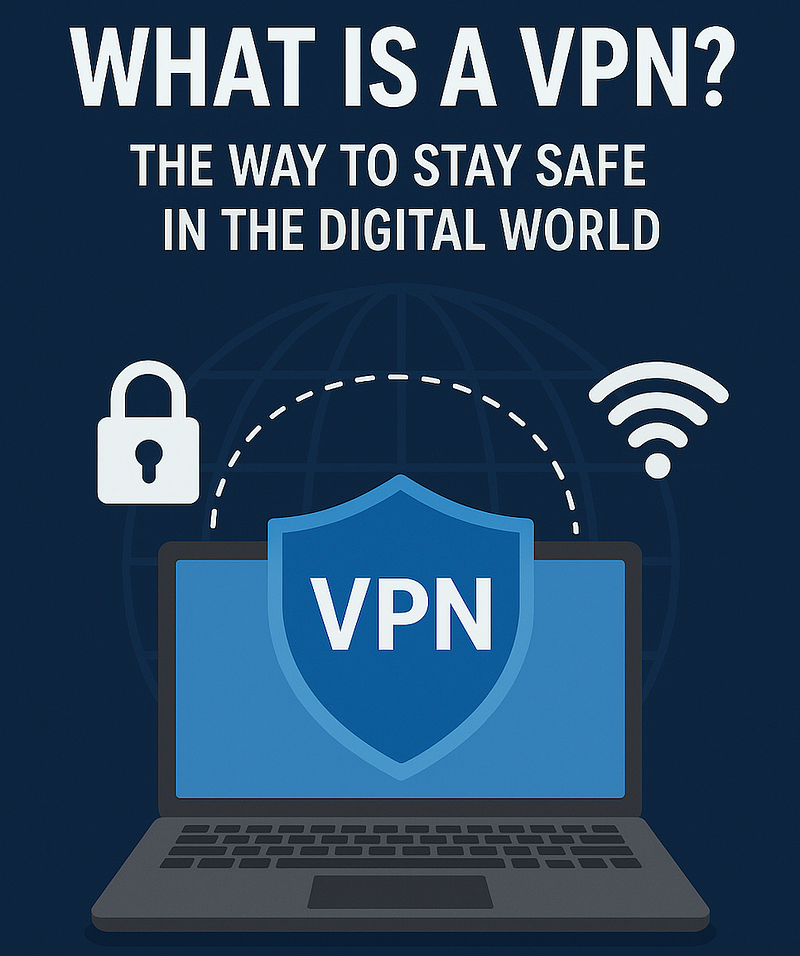
A Virtual Private Network (VPN) is a technology that encrypts internet traffic, hides your IP address, and enhances online privacy. It is widely used to secure public Wi-Fi connections, bypass geo-restrictions, prevent ISP tracking, and protect sensitive data from cyber threats.
In this article, we examine how VPN technology works, the most common protocols (OpenVPN, WireGuard, IKEv2), encryption standards such as AES-256 and ChaCha20, and real-world use cases. We also analyze free VPN services in terms of security, speed, logging policies, and jurisdiction risks.
What is a Virtual Private Network (VPN)?
Definition and Conceptual Framework
A Virtual Private Network (VPN) is a network technology that creates a secure and confidential communication channel by encrypting users’ data traffic on the internet. VPN aims to protect data integrity and confidentiality while providing access to private networks over public networks. This technology is used for various purposes, such as ensuring data security on public networks, bypassing geographical restrictions, and concealing user identity.
Basic Function
VPN creates an encrypted tunnel between the user’s device and the target server, preventing third parties from monitoring or altering data. During this process, the user’s real IP address is hidden, and access to the internet is provided using the VPN server’s IP address. This protects both identity privacy and enhances data security.
Historical Background
VPN technology was first developed in the 1990s to meet the need for remote access in corporate networks. Over time, it has become widespread in line with individual users’ demands for online privacy and freedom from censorship. Today, both commercial VPN services and open-source solutions are preferred by a wide range of users.
Areas of Use
VPN technology is widely used in the following areas:
Corporate access: Enabling company employees to establish secure remote connections.
Privacy and anonymity: Hiding the real IP address and preventing online tracking.
Censorship and access restrictions: Accessing geo-restricted content (e.g., Netflix, YouTube).
Public network security: Data protection on open Wi-Fi networks such as cafes and hotels.
Conceptual Analogy
VPN acts as a “secret passage” in the digital world. Just like a tunnel in the physical world allows a person to move through a crowded street unseen, VPN provides a secure path by protecting internet traffic from outside observers.
Technical Structure of VPN
General Architecture
VPN technology works by establishing an encrypted connection between the client (user device) and the VPN server. This connection is often called a “tunnel” and prevents data from being monitored or altered by third parties. The VPN client connects to the VPN server via software running on the user’s device, and all internet traffic is routed through this server.
VPN Protocols
One of the most important components determining the security and performance level of a VPN is the protocol used. The main VPN protocols are as follows:
OpenVPN: An open-source, highly secure, and flexible protocol. It uses SSL/TLS-based encryption. It can work over both TCP and UDP.
WireGuard: A next-generation, lightweight, and fast protocol. It uses modern cryptography algorithms. Its small code base makes it easy to audit and implement.
IKEv2/IPSec: Ideal for mobile devices, this protocol is resilient to connection drops. It provides strong encryption when used with IPSec.
L2TP/IPSec: Layer 2 Tunneling Protocol (L2TP) becomes secure when used with IPSec. However, it may be slower than modern alternatives.
SSTP (Secure Socket Tunneling Protocol): Developed by Microsoft and compatible with Windows systems. It works over SSL.
Encryption and Authentication
VPN systems use strong encryption algorithms to ensure data security. The most common algorithms are:
AES-256 (Advanced Encryption Standard): Provides military-grade security. Used with protocols such as OpenVPN and IKEv2.
ChaCha20: A fast and secure alternative optimized for mobile devices. Preferred by WireGuard.
Authentication establishes a secure connection between the client and the server. Methods such as certificate-based authentication, username/password combinations, or two-factor authentication (2FA) can be used.
DNS and IP Leak Prevention
During VPN usage, DNS and IP leaks can compromise user privacy. Therefore:
- VPN clients should use private DNS servers.
- IPv6 traffic should be blocked or redirected.
- The Kill Switch feature prevents data leaks by stopping all traffic when the VPN connection is lost.
Server Structure and Locations
VPN service providers typically have servers distributed worldwide. These servers:
- Provide users with IP addresses from different countries.
- Are used to bypass geographic restrictions.
- Server density and physical location affect connection speed and latency.
VPN Use Cases
VPN technology serves various purposes at both the individual and corporate levels. In this section, we explain how VPNs are applied in practice and in which situations they are preferred, using examples.
Secure Communication on Public Networks
Public Wi-Fi networks, such as those in cafes, hotels, and airports, pose a high risk in terms of data security. Using a VPN protects users from potential attacks by encrypting data traffic on such networks. It is an effective measure, especially against man-in-the-middle attacks.
Example: A journalist encrypts their data using a VPN while sending news articles over a hotel Wi-Fi network, reducing the risk of surveillance.
Overcoming Geographic Restrictions
Some digital content (e.g., Netflix, BBC iPlayer) is only accessible in certain countries. A VPN allows users to bypass such geographic restrictions by redirecting their IP address to a different country.
Example: A user living in Turkey can connect to a US server to watch a series that is only broadcast in America.
Censorship and Access Restrictions
In some countries, social media platforms, news sites, or communication apps may be blocked. A VPN is an effective tool for bypassing these restrictions. It plays a particularly critical role in terms of freedom of expression.
Example: An activist can access information by connecting to a blocked news site via a VPN.
Remote Access to Corporate Networks
Company employees use VPNs to securely access corporate resources while outside the office. This protects internal files, email systems, and intranet services from external threats.
Example: An engineer can connect to the company’s server via VPN from home to access project files.
Torrent and P2P Traffic
Some internet service providers (ISPs) may limit or monitor torrent and P2P (peer-to-peer) traffic. Using a VPN encrypts this traffic, increasing privacy and bypassing speed restrictions.
Note: Using a VPN does not eliminate legal liability for copyright infringement.
Data Protection on Mobile Devices
Mobile devices are more vulnerable in terms of security because they constantly connect to different networks. VPN applications protect users by encrypting mobile data and Wi-Fi connections.
Example: A user increases data security by using a VPN when performing banking transactions on their cell phone.
Comparing VPN and Alternative Technologies
Overview
VPN, Proxy, and Tor are three fundamental technologies used to enhance user online privacy and bypass access restrictions. Each offers different levels of security, speed performance, and usage scenarios.
VPN vs Proxy
A proxy only redirects traffic from specific applications (e.g., a browser). It does not provide encryption, making it weak in terms of data security.
A VPN covers all system traffic and offers strong encryption. In this regard, it is more secure than a proxy.
Example: You can access YouTube using a proxy, but a VPN should be preferred when performing banking transactions.
VPN vs Tor
Tor provides high anonymity by routing traffic through multiple servers (nodes). However, this multi-routing reduces connection speed.
VPN is faster and covers all system traffic; however, its anonymity level is not as high as Tor.
Example: An activist may use Tor to avoid government surveillance; an employee may prefer a VPN to access a corporate server.
Security and Legal Status
VPN and Tor provide privacy; however, user responsibility does not disappear when they are used for illegal activities. Proxy servers are often used to bypass corporate filters, but they are not recommended from a security standpoint.
Major Free VPN Services
Windscribe
- Encryption & Privacy: AES-256 encryption, strict no-logs policy.
- Free Plan: 10 server locations, 2 GB/month data limit (15 GB with email verification).
- Key Features: Ad blocker, firewall, split tunneling, unlimited device connections.
- Jurisdiction: Canada (Five Eyes member)
TunnelBear
- Encryption & Privacy: AES-256 encryption, user-friendly interface, no-logs policy.
- Free Plan: 500 MB/month data limit.
- Key Features: Auto-connect, IP masking, geo-block bypass.
- Jurisdiction: Canada
ProtonVPN
- Encryption & Privacy: AES-256, multi-hop server routing with Secure Core technology, no-logs policy.
- Free Plan: Unlimited data, servers in 3 countries (Japan, Netherlands, USA); Poland and Romania added with the latest update.
- Key Features: Split tunneling, DNS leak protection, high speed.
- Jurisdiction: Switzerland (privacy-friendly country)
Speedify
- Encryption & Privacy: ChaCha or AES encryption, channel bonding technology.
- Free Plan: 2 GB/month data limit.
- Key Features: Speed optimization, Wi-Fi and mobile data bonding for connection stability.
-Jurisdiction: Usa
Hide.me
- Encryption & Privacy: Protocols such as AES-256, OpenVPN, IKEv2, L2TP/IPsec; no-logs policy.
- Free Plan: 10 GB/month data limit, 5 server locations.
- Key Features: Kill switch, IP leak protection, port forwarding.
- Jurisdiction: Malaysia (privacy-friendly country)
Conclusion
This study systematically examines the basic functions, security protocols, and user-oriented advantages of virtual private network (VPN) technology. In particular, the technical capacity, data policies, and jurisdictions of free VPN services were examined comparatively; an evaluation was made based on leading services such as Windscribe, TunnelBear, ProtonVPN, Speedify, and Hide.me. The findings show that: In terms of privacy and data security, Switzerland- and Malaysia-based services such as ProtonVPN and Hide.me stand out. In terms of user experience and speed optimization, Windscribe and Speedify offer technically differentiated solutions. In terms of ease of access and interface simplicity, services such as TunnelBear play an effective role in bringing VPN technology to a wide user base. In this context, VPN technology is not only a technical security tool; it also occupies a strategic position in terms of digital freedom, privacy, and access rights. The limited but functional infrastructure offered by free services can provide sufficient protection for individual users at a basic level. Ultimately, VPN selection should be based not only on technical specifications, but also on the user’s priorities, geographic location, and digital behavior.
FREQUENTLY ASKED QUESTIONS
Does a VPN provide complete anonymity?
No. A VPN hides your IP address but does not guarantee total anonymity. The provider’s logging policy is critical.
Are free VPN services safe?
Some are safe, but many have data limits or speed restrictions. Always review the privacy policy.
Does a VPN reduce internet speed?
Encryption and server distance may cause slight speed loss. Modern protocols like WireGuard minimize this impact.
Is using a VPN legal?
In most countries, yes. However, illegal activities remain illegal even when using a VPN.
Can a VPN bypass all restrictions?
Not always. Some platforms actively detect and block VPN traffic.
If you liked this article, you might also like my other work:
Comments
Post a Comment