The Headscarf Ban in Turkey: Freedom, Identity, and the Symbolism of “Don’t Cry, Carnation”
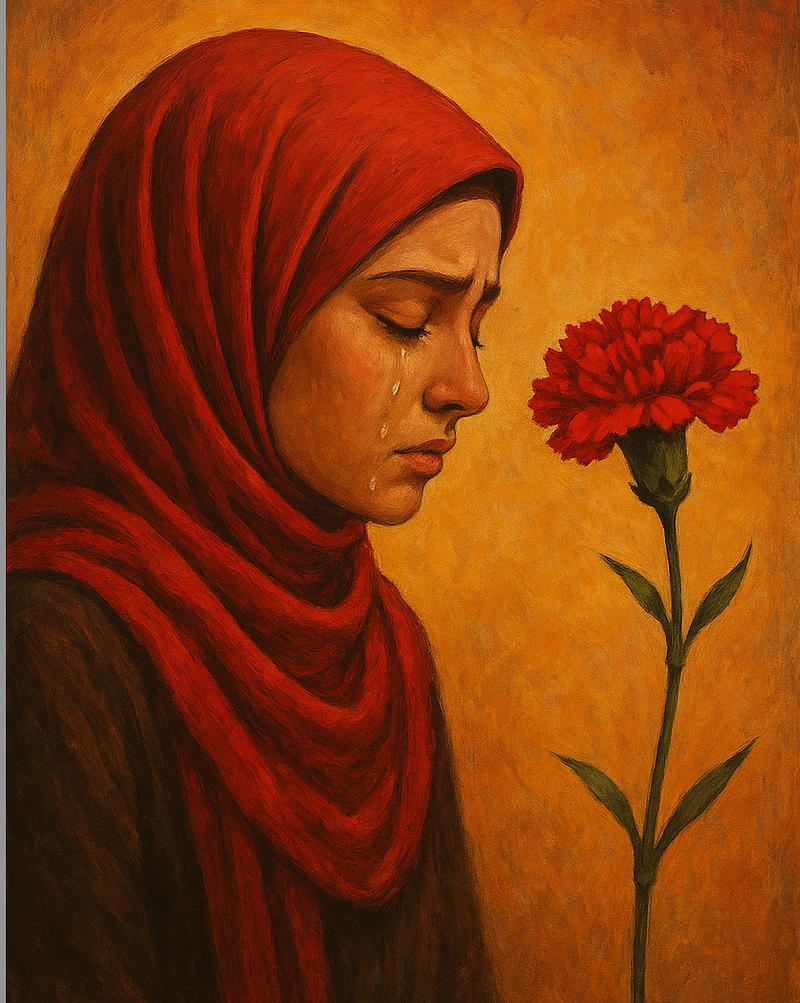
The headscarf ban remains one of the most debated issues in Turkey’s recent history. Beyond a simple dress code restriction, it represented a broader conflict over identity, religious freedom, and the right to education. For many women, it was not merely about clothing but about dignity and personal conviction.
In this article, we examine the social and emotional impact of the headscarf ban, and analyze how Eşref Ziya Terzi’s song “Don’t Cry, Carnation” became a cultural symbol of hope and resistance. The aim is not to romanticize the past, but to understand how collective memory shapes today’s perception of freedom.
Looking back at the past, one of the most debated issues in Turkey’s recent history has been the headscarf ban. Our young women waiting at university gates, wanting to enter with their dreams, were turned away because of their headscarves. In government offices, in the military, in schools… In many places, women wearing headscarves were barred from entering. Sometimes they were even forcibly removed. This ban targeted not just a piece of cloth, but also freedom and identity.
What happened in those years left a deep mark on society’s memory. Because this ban took away a generation’s right to education, their right to work, and most importantly, their right to exist with their own identity. In the “conviction rooms” set up at university entrances, our young women were forced to remove their headscarves. Many women either gave up their education or their identity. That is why the headscarf struggle was not just a matter of clothing, but a struggle for freedom.
However, today we are faced with a different picture. The headscarf, once worn by religiously devout individuals to fulfill their faith’s requirements and as a symbol to protect their hair from being seen by strangers, is now viewed by many as merely a fashion item. The headscarf has become part of clothing combinations at times and a trend accessory at others. This change is in fact closely related to how the perception of religion has changed in society. For a broader discussion on this topic, please see our article titled "Religious Understanding Today: Formalism, Modernization and the Crisis of Meaning". This situation is interpreted as a diminishing of the headscarf’s true significance. Because the struggle in the past was a meaningful struggle for freedom; today, however, it is a choice, an adornment, a fashion for the majority.
This change evokes different feelings in society. For some, it means the normalization of the headscarf and its acceptance as a natural part of life. For others, it means the overshadowing of the deep religious and freedom symbolism carried by the headscarf. That is why it is so important to remember the struggle of the past and question today’s perception.
And it is precisely at this point that art, especially music, became the voice of the people. Because music expresses emotions where words fail. Eşref Ziya Terzi’s song “Ağlama Karanfil” (Don’t Cry, Carnation) became one of the symbols of this period. The carnation was like a flower that bloomed with hope despite the bans. The song was engraved in memories as a call for freedom against the headscarf ban. For listeners, it was not just a melody, but a reminder: “No matter what, hope will blossom.”
Today, the bans are behind us. Headscarves are allowed in universities, public institutions, and the military. But what happened in the past has not been forgotten. Because this struggle was a silent but powerful cry for freedom from a generation.
And now, at the end of this conversation, a song comes to remind us of that cry once again… 🎶 Don’t Cry, Carnation 🎶
“Don’t cry, carnation, don’t make me cry too Wipe away your tears,
Your love will flourish with blessed seeds On tender lips.”
These lines are not just song lyrics; they are a symbol that tells the story of an era’s pain, hope, and resistance. The carnation’s tears were the tears of women resisting oppression. But they were also a symbol of the budding hopes for the future.
FREQUENTLY ASKED QUESTIONS
What was the headscarf ban in Turkey?
It was a restriction that prevented women wearing headscarves from accessing universities, public institutions, and certain professional fields.
Why was the issue considered a freedom struggle?
Because it involved the right to education, employment, and the ability to publicly express religious identity.
What were the “conviction rooms”?
They were controversial spaces in universities where students were pressured to remove their headscarves.
Why did “Don’t Cry, Carnation” become symbolic?
The song represented emotional resistance and hope during the period of restrictions.
Is the headscarf still banned in Turkey today?
No. Headscarves are currently permitted in universities, public institutions, and the military.
If you liked this article, you might also like my other work:
Comments
Post a Comment