Can Cancer Be Treated with Herbal Remedies? Scientific Evidence and Alternative Approaches
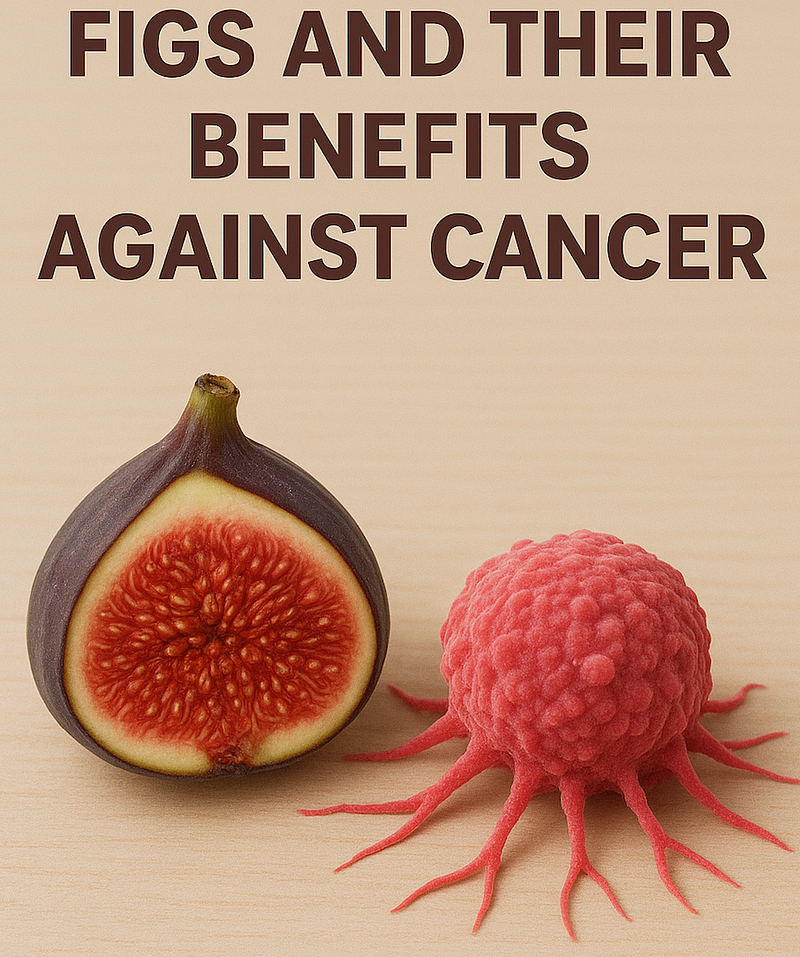
Cancer is one of the most complex and multidimensional diseases in modern medicine. While surgery, chemotherapy, radiotherapy, immunotherapy, and targeted therapies form the foundation of treatment, many people continue to ask: Can cancer be treated with herbal remedies?
Natural mixtures such as fig and olive oil, carrot juice, nettle, beetroot juice, and various fasting-based protocols frequently appear in public discussions. This article examines the biological mechanisms of cancer, current medical treatments, and commonly mentioned herbal approaches from an analytical and evidence-based perspective. The goal is not to promote or dismiss claims, but to present a clear framework grounded in scientific reasoning.
What is Cancer?
Cancer is a group of diseases caused by the uncontrolled division and multiplication of cells. Normally, cells grow, divide, and die in a specific order. However, cancer cells disrupt this order; they can spread both within the tissue they are located in and to other organs.
Mechanism of Formation
Genetic mutations, environmental factors (smoking, radiation, chemicals), and certain infections cause damage to cell DNA. This damage causes cells to ignore “death signals” and multiply without limit.
Systems Affected
Depending on the type of cancer, it can affect different organs: lungs, breasts, prostate, colon, etc. In advanced stages, it can suppress the immune system, impair organ function, and reduce overall quality of life.
Problems Caused by Cancer
Cancer is a systemic disease that affects not only the cellular level but the entire organism. As the disease progresses, various problems arise at both the physical and psychological levels.
Physical Effects
Impaired organ function: Cancer cells can destroy healthy tissue and interfere with organ function.
Pain and fatigue: Tumor growth can compress nerves, and the treatment process can cause chronic fatigue.
Suppression of the immune system: Both the disease itself and the treatment process weaken the immune system.
Psychological and Social Effects
Anxiety and depression: Uncertainty after diagnosis, the treatment process, and a decline in quality of life can lead to psychological problems.
Social isolation: Patients may withdraw from their social circles due to physical limitations and emotional burden. These effects may vary depending on the type and stage of the disease and the patient’s overall health.
How Is Cancer Treated Today?
In modern medicine, cancer treatment is planned according to the type and stage of the disease and the patient’s general health. Treatment is usually carried out using a combination of several methods.
Basic Treatment Methods
Surgical Intervention: Physical removal of the tumor. It is usually preferred in early-stage cancers.
Chemotherapy: Systemic administration of drugs that destroy cancer cells. Side effects include nausea, hair loss, and immune suppression.
Radiotherapy: Targeting and destroying tumor tissue with high-energy rays.
Immunotherapy: Drugs that enable the immune system to recognize and destroy cancer cells.
Targeted Therapies: Drugs that target specific genetic characteristics of cancer cells are used.
Medications Used
Cytotoxic agents: They inhibit tumor growth by stopping cell division.
Monoclonal antibodies: They target cancer cells by binding to specific proteins.
Kinase inhibitors: Stop proliferation by blocking intracellular signaling pathways.
Although these drugs are effective in controlling the disease, they can cause serious side effects and long-term complications. For this reason, supportive treatment methods have also gained importance.
Harmful Effects and Limitations of Drugs
Although drugs used in cancer treatment play an important role in controlling the disease, they carry serious side effects and limitations. These effects can reduce the patient’s quality of life and make compliance with treatment difficult.
Common Side Effects
Nausea and vomiting: Chemotherapy drugs, in particular, affect the gastrointestinal system, causing nausea.
Hair loss: Drugs that target cell division can also affect hair follicles.
Suppression of the immune system: Defenses against infection weaken; patients may get sick more often.
Fatigue and weakness: Energy levels drop due to both the disease itself and the systemic effects of the drugs.
Limitations
Resistance development: Some types of cancer may develop resistance to the drugs used over time.
Off-target effects: Drugs may affect healthy cells as well as cancer cells.
Treatment failure: In advanced stages, some drugs may become ineffective; the disease continues to progress.
For these reasons, research on supportive and complementary methods is increasing; herbal supplements, in particular, are attracting public interest.
Herbal Methods
Fig and Olive Oil Mixture
Some sources quote Süleyman Hilmi Tunahan (k.s.) as saying:
“Doctors will learn that cancer can be treated with figs.”
In this context, the recommended mixture is prepared as follows:
- Wash real, unprocessed dried figs and drain the water.
- They are chopped into small pieces and placed in a jar.
- Natural olive oil without additives is added on top.
- The jar is sealed and left to stand for 3–5 days.
- It is consumed on an empty stomach in the morning and evening.
In Dr. Aidin Salih’s book Real Medicine;
Treatment at the Onset of Cancer and Tumors
To stop tumor formation:
For 7 days, drink lemon or grapefruit juice 3–4 times every morning. Throughout the day, whenever you feel hungry, drink as much juice as you want from any type of green leafy vegetable, such as nettle, chicory, or wild purslane. Every evening, drink a mixture of 50 grams of garlic-infused olive oil + 50 grams of lemon juice. Every morning, take half a teaspoon of ground and sifted wormwood; at noon, take 1 tablespoon of walnut juice with 1 glass of water; every evening, take 1 teaspoon of ground cloves with water. Immediately after completing 7 days, a 3-day fast should be followed by a liver cleanse. One week after the liver cleanse, a 3-day fast is performed 7 times at 7-day intervals, with a liver cleanse after the 4th and 7th fasts. Between fasts, wormwood, walnut water, and cloves are continued from the second day until the next fast. Ten days after this 70-day process, a single 10-day fast is performed. Then, for 3 months, 3-day fasts are continued on the 13th, 14th, and 15th days of the Hijri months, and at the end of 3 months, another 10-day fast is performed. Along with the 3-day fasts, cupping therapy is started. After 2–3 weeks following the completion of cupping therapy, leech therapy is initiated; however, leech therapy must be performed in a specific manner depending on the patient’s blood condition and the location of the cancer.
After this, the patient can visit the doctor for a check-up to see the results.
With this treatment, the tumor cells begin to change. As a result, the tumor mass may have shrunk, grown, or remained unchanged. There is no need to fear these outcomes, because the harmful effects of the tumor have ceased from the moment fasting begins.
In some cases, the patient may be required to undergo 10 days of fasting 3–5 times at 3-month intervals. During these 3-month intervals, 36-hour fasts are also continued once a week. Wormwood, cloves, and walnut juice have a special place in cancer treatment and must be used.
Preparation of walnut juice: Fresh walnuts collected in May are slightly crushed and placed in a half-liter glass jar, then filled with boiled and cooled water to cover them. Leave it in the refrigerator for 7 days, then strain it. The color of the water should be light brown to green.
Diet and medications on non-fasting days:
In the morning, drink 30 grams of garlic-infused olive oil or 10 grams of black cumin oil. From morning until noon, drink 2–4 glasses of vegetable juice mixed with water without eating anything else. Use whichever of the vegetables recommended for cancer is in season.
At noon, you can eat any raw fruit or salad you like, or drink as much fruit juice as you want.
In the afternoon, you can eat a meal.
In the evening, green tea, pine needle tea, or rosemary tea can be drunk with honey.
Or;
Eat 1–2 tablespoons of sprouted wheat, honey can be added if desired. Do not forget to wash the sprouted wheat before eating.
Those with severe cancer should not eat food, but should eat raw vegetables and fruits. Those with intestinal cancer should not even eat fruit, but should only drink fruit and vegetable juices.
Each of the following plants is an excellent food and also a medicine against cancer: ginger, garlic, onion, carrot, red beet, raw spinach, purslane, rocket, parsley, white cabbage, broccoli, pumpkin, green tea, pine sprouts, birch sprouts, and rosemary.
It is sufficient to consume sprouted natural wheat or barley for only 40 days during any month of the year. However, the best time to maximize the benefits is during the wheat and barley planting season, which is February-April.
Start with 50 grams of red beet juice and increase to 200–400 grams daily. Beetroot juice may cause dizziness and nausea in the first few days. To get used to it, it should be mixed with carrot juice. Once accustomed, 100 grams of beetroot juice mixed with 50 grams of water is consumed four times a day. Adding 50 grams of onion juice to this mixture makes it even more effective. It is beneficial for all types of tumors and cancer.
Carrot juice is used against stomach and intestinal cancer and all tumors. Because cancer usually develops due to intestinal disease; that is, those without intestinal disease do not get cancer. Carrot juice is a miraculous remedy against all types of cancer, especially skin, eye, brain, and lung cancer. It is very beneficial for cancer patients to spend 2–4 days a week drinking only carrot juice between 10-day fasts. After liver cleansing, those who drink only carrot juice for 21, 30, or 40 days, eat 1 tablespoon of freshly ground caraway seeds mixed with 50–60 grams of real honey daily, fast for 10 days afterwards, and then eat only raw vegetables and fruits can achieve excellent health in a short time. Carrot juice can be consumed in quantities ranging from 400 grams to 1.5 liters per day. Adding 200–250 grams of onion juice to carrot juice per day is more effective. Like all vegetables, carrots should be juiced with their skins on.
Once a day, steep 1 teaspoon of rosemary or 1 teaspoon of pine shoots in a cup of hot water for 30 minutes and drink. It can be used in 3-week courses with 2-week breaks throughout life.
Nettle can be used in many ways for a long time: Brew it as tea, sprinkle it on food, make salad or dishes from fresh leaves, or squeeze fresh leaves and drink the juice. It is even more effective when mixed with onion juice. Mix nettle seeds with natural honey and swallow 1 tablespoon every evening.
Or;
Equal amounts of calendula, nettle, yarrow, and mayflower are mixed together. Three tablespoons of this mixture are steeped in 1–1.5 liters of water for 10 minutes, then strained. It is then sipped throughout the day. This is repeated 3–4 times in 10-day courses with one month in between.
Or;
Mix equal amounts of oxtail root, purple iris root, and dandelion root and chop finely. Boil 1 teaspoon of the mixture in 1 cup of water for 10 minutes over low heat, strain, and drink. Continue for 30–40 days. It is a remedy that cleanses and strengthens the liver, blood, and all tissues.
Or;
Eat 3 bitter melon leaves with a little honey, or boil 4 bitter melon leaves with their stems in a cup of water over low heat for 3 minutes, let cool, sweeten with a little honey, drink, and eat the leaves. Increase the number of leaves every two days up to 7–10 leaves. Use for a total of 4 weeks. Repeat 3 times at one-month intervals. This treatment can be done every year, but those with blood types “O” and “B” should not use more than 7 leaves, and those with blood types ‘A’ and “AB” should not use more than 10 leaves.
Bitter melon draws harmful substances from deep within and expels them through diarrhea and vomiting.
One of the following dressings can be used for external tumors:
Fresh nettle seeds are ground and soaked in ginger juice,
Nettles are burned, and the ashes are mixed with freshly ground nettle seeds, Nettles are burned, and the ashes are kneaded with melted rock salt,
Fresh crushed wild purslane, nettle, fresh vine shoots and leaves, forest ivy, bitter melon leaves, or oleander leaves are placed on greaseproof paper and wrapped around the tumors. They are secured with gauze and left for 6–7 hours.
The same remedies can also be used for cancerous wounds. They are simply covered with gauze instead of wax paper.
Patients undergoing this treatment should only eat the raw vegetables mentioned above that are known to cure cancer. They should consume fruit, watermelon, honey, the teas mentioned above, sprouted wheat, barley water with honey, and walnuts and unroasted almonds, provided they do not exceed 20–30 grams per day, and should eat nothing else. However, if they really crave it, they can eat 100–150 grams of boiled or baked meat or fish with salad 1–2 times a week.
For patients in this condition, bread and baked goods made from wheat flour, margarine and refined liquid oils, fried foods, ice cream, coffee, black tea, packaged foods and beverages are strictly prohibited.
Vegetable juice mixtures that can be drunk according to preference and season:
200 g purslane juice + 30 g parsley juice + water mixture.
Equal amounts of white cabbage and carrot juice + 30 g celery leaf or parsley juice water mixture.
Equal amounts of broccoli and carrot juice + 30 g parsley juice + water mixture.
Equal amounts of carrot and red beet juice + 30 g cucumber or parsley juice + water mixture. (Especially against prostate, liver, and ovarian cancer).
Equal amounts of spinach and carrot juice + 50 g nettle juice + water mixture.
Carrot juice + apple juice + water mixture.
In spring:
100 g nettle juice + 50 g chicory juice + 50–100 g water mixture. 100–150 g yogurt whey + 50 g nettle juice + 50 g chicory or parsley juice + water mixture.
50 g onion juice + 100 g cabbage juice or nettle juice squeezed with the hard part in the middle + 50–100 g water mixture.
100 g wild purslane juice + 50 g nettle juice + 50 g water mixture.
Only benign large tumors, large cysts, and enlarged sebaceous glands can be surgically removed. If surgery is decided upon, intestinal treatment and liver cleansing are performed before the operation. After these, 3-day fasts are performed 7 times. During this treatment period, the tumor forms a sharp border, becomes easily removable, and thus, during surgery, there is no need to remove the organ along with the tumor and cysts.
FREQUENTLY ASKED QUESTIONS
Can cancer be cured solely with herbal remedies?
There is no strong, universally accepted scientific evidence showing that herbal remedies alone can cure cancer. Standard medical treatment remains the primary approach.
Can herbal treatments replace chemotherapy or radiotherapy?
No. Herbal approaches may sometimes be considered supportive, but replacing conventional treatment can be dangerous.
Do carrot juice or beetroot juice eliminate cancer cells?
While these foods contain antioxidants and beneficial nutrients, there is no conclusive scientific proof that they directly cure cancer.
Does prolonged fasting destroy cancer cells?
Some experimental research exists, but fasting is not recognized as a standalone or primary cancer treatment in clinical practice.
Are herbal products always safe?
No. “Natural” does not automatically mean safe. Certain herbs can interact negatively with chemotherapy drugs or other medications.
If you liked this article, you might also like my other work:
Comments
Post a Comment